

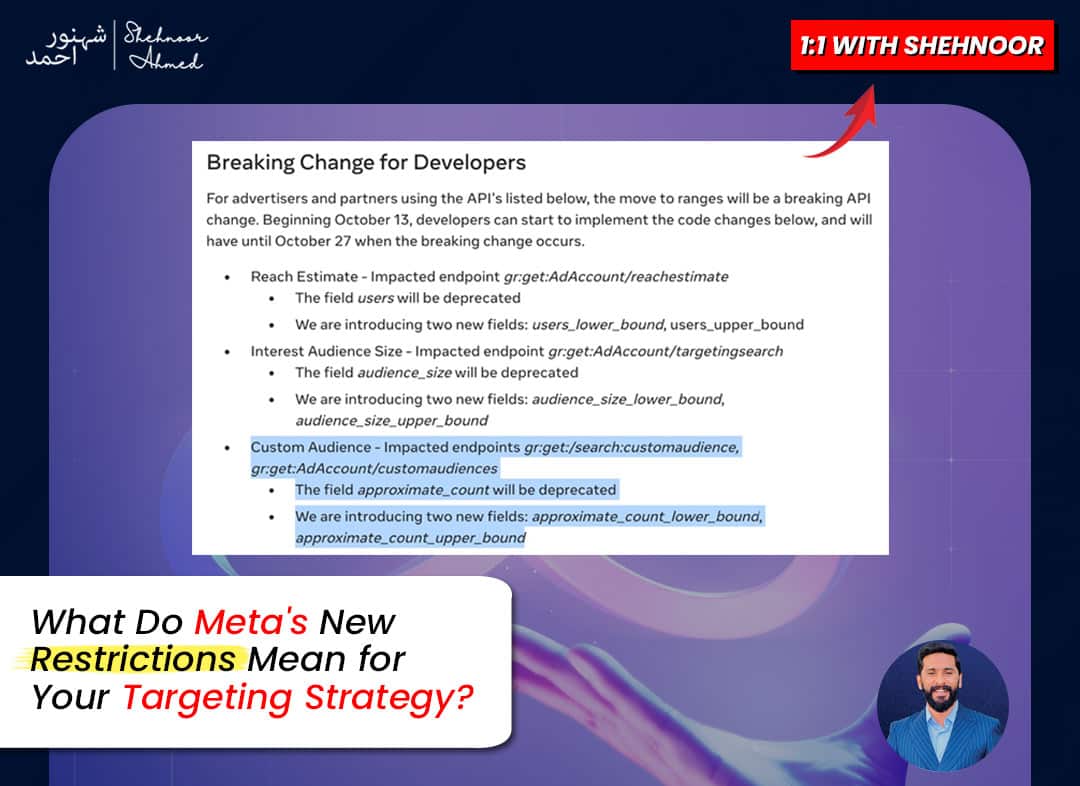
If you’ve been running ads on Facebook or Instagram lately, you might have noticed that something seems off. The reach isn’t as good as it used to be. More clicks cost more. It seems like the targeting is more precise, and even your best campaigns don’t seem to work as well as they used to.
You aren’t imagining it. Again, Meta has changed how targeting and tracking work. And even though most business owners think they’re doing something wrong, the truth is much simpler: the rules have changed.
I’ve seen this happen with clients in the UAE, the UK, and other places. Businesses that used to do well with Meta ads are now having trouble getting the same results. It’s not bad marketing; it’s old systems that are the problem.
Just being visible won’t guarantee growth in 2025. You can post every day, promote your best content, and still feel stuck. What really makes money these days is strategy, the kind that links knowledge to action.
That’s where I come in. I help brands stop guessing and start growing by using systems, stories, and smart targeting to turn clicks into long-term customers.
What Digital Strategy Really Means (More Than Just Ads and Likes)
A lot of the time, when people hear “digital strategy,” they think I’m talking about content calendars or ad campaigns. But that’s not a plan; it’s just doing things.

Your plan for growth should include a real digital strategy. It’s how you link your message, your audience, and your offers together so that they all work together.
Even a lot of money won’t work if there isn’t a plan. I’ve seen brands spend thousands on ads without keeping track of where leads go, what works, or why campaigns do better or worse from month to month.
A smart plan tells your marketing what to do. It turns random actions into results that can be measured. It’s how you stop living off of “one good post” and start building a steady flow of traffic.
Why Most Companies Don’t Use Their Marketing Budget Wisely

Here’s a hard truth: a lot of businesses waste a lot of money on marketing.
They follow every new trend, copy what their competitors do, or boost posts that “look good.” But none of that matters if you don’t keep track of how well you’re doing.
Research shows that almost 60% of small businesses spend money on marketing without keeping track of their return on investment (ROI). More than half of them are spending time without knowing what they’re doing.
Data, not luck, is what leads to growth. You can’t double down on something if you don’t know what it is. Also, if you don’t keep track of things correctly, even the best ideas can seem like failures.
For digital success, you need to be clear about who you’re talking to, what message works, and what actions make a difference.
Also read: Meta Targeting in 2025: What’s Changed and How to Stay Ahead
The Three Parts of a Good Digital Strategy
Every successful brand I’ve worked with, from a new business in Dubai to an established one in London, has three simple pillars.
1. Positioning
This is where it all begins. Your positioning tells people who you help, how you help them, and what makes you different. No matter how good your ads look, they won’t work if your brand message isn’t clear.
2. Marketing for Performance
Paid ads on sites like Meta, Google, YouTube, and others come here. But the goal isn’t just traffic; it’s qualified traffic. Performance marketing should bring in the right people, not just more people.
3. System for keeping
This is where real change takes place. You don’t want to lose a customer’s trust after just one sale. You can get customers to come back again and again by using email marketing, CRM, and remarketing systems.
When your business has all three positioning, performance, and retention growth is no longer a fluke. It becomes clear.
From Awareness to Action: Getting Clicks to Become Clients
I recently worked with a real estate company in Dubai that was having trouble turning business into real leads. Their ad got thousands of clicks, but not many calls or questions.
We didn’t change how much they spent on ads. Instead, we improved their conversion funnel, made their landing pages easier to use, rewrote their calls to action, and set up a system for automatic follow-up.
Their qualified leads went up by 38% in just 45 days. Same amount of money. Better structure.
That’s the difference between knowing and doing something. Ads get people’s attention, but systems make them clients.
What every business should have in 2025
The digital world is always changing, but the right tools make it easier to keep up. Here are some things I tell my clients they need:
- Meta Ads Manager lets you test and improve your campaigns.
- Google Analytics 4 lets you see what really leads to conversions.
- Salesforce or HubSpot can help you keep track of leads and sales pipelines.
- Display & Video 360 lets you target and report on your audience in more advanced ways.
But I want to be clear: tools don’t take the place of strategy. They do it.
I tell my clients all the time, “Tools make a good plan better; they can’t fix a bad one.”
Real Growth vs. Metrics That Are Just For Show
Likes, followers, and other numbers that don’t really matter can be easy to get caught up in. Those are metrics for vanity.
Your conversion rate, ROI, and customer retention all show real growth. You’re not growing your business if it’s not getting better in those areas; you’re just looking busy.
Businesses that keep track of their ROI grow 1.5 times faster than those that don’t. It’s easy to see why: you can do more of what works when you know what it is.
Why it’s important to work with a certified expert
I’ve been in digital marketing for more than eight years, and one thing I’ve learned is that being an expert saves money.
You can spend months trying out ads, guessing what works, and following trends, or you can hire someone who has already done all of that.
You get more than just campaigns when you work with a certified strategist. You get clarity. You save money on ads, learn faster, and start getting consistent results.
It might be time to get a roadmap made for real growth if you’re sick of running ads that don’t work.
Table of Strategies
| Part of the Strategy | Why It’s Important | What to Do |
| Setting Up | Defines what a brand is | Make your niche and target audience clear |
| Funnel for Conversion | Turns interest into sales | Create a clear path from ad to purchase |
| System for Keeping | Keeps customers coming back | Use email marketing and remarketing campaigns |
| Keeping Track of Data | Helps make smarter decisions | Set KPIs and consistently monitor ROI |
| Media That Costs Money | Brings in targeted traffic | Optimize paid campaigns for higher conversions |
Important Points:
- First, make a plan. The tools come second.
- Don’t measure your vanity metrics; measure what matters.
- Real marketing creates systems that can grow, not fads that go away.
Last Thoughts
It may seem like Meta’s new rules are a setback, but they are actually a chance to market better.
You’ll not only protect your ROI, but you’ll also grow it if you can change faster than your competitors.
Random posts and boosted ads won’t help your business grow. It comes from having systems, structure, and stories that link attention to conversion.
I’d love to help you make your next-level marketing plan, one that really works, if you’re ready to turn clicks into paying customers.

For help with marketing, send an email to [email protected].com.
This post may contain affiliate links. As an affiliate partner, we may earn commissions from qualifying purchases made through these links, at no additional cost to you. Our recommendations are based on independent research and genuine opinions.